


As long as the human body, and especially man, does not spoil and signal ill health through pain in any part of it, it seems that this representative of the stronger sex will always be young and healthy, and minor ailments and painful symptoms will disappear by themselves.But, as statistics show, the first signs of prostatitis in men appear insignificantly and, accordingly, men themselves ignore them, which ultimately leads to quite serious consequences.What should be done at the first manifestations and signs of the development of prostatitis, how to prevent the worsening of the nature of the disease and prevent unwanted consequences - we will consider further in this article.
General information
According to statistical data, prostatitis is the most common exclusively male urological disease, and it is an inflammation of such a component of the reproductive system as the prostate, which is located below the bladder.Simply put, the prostate is located near the urethra, closing it off.Inflammation of the prostate causes its enlargement, due to which it exerts pressure on the urinary canal, reduces the lumen in it, which makes it impossible to completely empty the bladder during urination.
A few decades ago, prostatitis was considered a disease of adulthood, because this disease was observed in representatives of the stronger sex after the age of 45, while today signs of prostate inflammation can also appear in young (under 30) men.
The prostate performs the following functions in the male body:
- produces a secretion that makes sperm more liquid and helps to extend the period of sperm activity;
- produces prostaglandins and other active substances and hormones;
- ensures sufficient speed of sperm release;
- protects sperm from entering urine.
The main problem that occurs as a result of the development of prostatitis is that as the volume of the gland itself increases, an increasing amount of urine remains in the bladder after urination and poisons the male body.Therefore, you must not ignore even minor symptoms of inflammation, so that the disease does not develop into more serious consequences.
Reasons
The results of long-term clinical studies made it possible to identify the main causes of the disease and the groups of people who most often suffer from prostatitis.
So, the risk group includes men:
- long-term work while sitting, as well as a sedentary lifestyle;
- have excess body weight;
- have promiscuous sexual relations, the consequences of which can be sexually transmitted infections;
- those who suffer from frequent constipation, which causes the spread of microorganisms and bacterial inflammation of the prostate;
- those exposed to excessive strain on the groin muscles due to injury or occupational characteristics, such as drivers;
- susceptible to frequent hypothermia, hormonal imbalances, as well as those whose sex life is not regular.
Signs of prostatitis in men
Every serious disease warns of the initial stage of development with certain signals.If you do not take them into account and do not seek the advice of a specialist in time, you can lose valuable time that could be used to treat the disease at the very beginning.
Often the disease appears without specific symptoms, turning without proper attention into a chronic form that is difficult to treat.
Every serious disease warns of the initial stage of development with certain signals.
But if a person is attentive to the changes happening to him, he will certainly notice the initial symptoms of inflammation in the following manifestations of prostatitis in men:
- Frequent urge to urinate at night.
- The very process of emptying the bladder is difficult, with a characteristic weak pressure, intermittent or split stream, painful and longer than the normal flow.
- A man feels a burning sensation when urinating, after which the feeling of a full bladder remains.
- Pain during defecation.
- Decreased quality of erection, fatigue, involuntary erections at night.
- Feeling of shivering due to elevated body temperature.
- Discharge of a certain color.
Symptoms of prostatitis
Prostatitis caused by microorganisms (bacterial) can usually appear in acute and chronic forms, each of which is characterized by the presence of specific symptoms:
- if prostatitis is observed in an acute form, then a significant increase in body temperature is common, the pain spreads not only to the prostate area, but also radiates to the groin and even to the lumbar region, men notice difficulties and frequent urination, decreased libido;
- The chronic course of prostatitis is characterized by characteristic pains in the pelvis and perineum, the presence of blood clots in the semen and painful ejaculation, a frequent urge to urinate at night, which is accompanied by a burning sensation and pain.
What are the characteristics of acute and chronic inflammation?
Prostatitis in acute form is observed much less frequently than in chronic form.The characteristic manifestation of the acute form of the disease is the characteristic severe pain, which is located in the perineum and intensifies during urination and defecation.In addition, prolonged discharge from the urinary canal and reduced erection may be observed.The temperature can rise to 38-39 degrees.In severe cases, with acute retention of urine, serious intoxication of the organism is possible.
Chronic prostatitis has symptoms similar to other urological diseases, and sometimes it is completely asymptomatic.But it can be recognized by mild and transient pains in the perineum, as well as in the groin and pubic region.The duration and quality of sexual intercourse changes significantly, and during morning urination, sediment in the form of white scales may be present in the urine.After emptying the bladder, a characteristic discharge can be observed.
Consequences
If a disease such as prostatitis is not detected and its timely treatment is not started, the consequences can be very disastrous - from disruptions in the patient's usual lifestyle caused by toilet addiction, constant unpleasant and painful feelings, intoxications due to poisoning by the body's own waste products that are stagnant in the urine, to significant urinary disorders, to significant urinary disorders.

In addition, prostatitis in men reduces the quality of sperm and, as a result, the probability of conception.Pathological processes occurring in the prostate can cause its abscess, kidney failure and inflammation of other organs of the genitourinary system.
Pain syndrome
Regardless of the form of prostatitis, this process is necessarily accompanied by pain, and the pain often spreads to the scrotum, sacrum, abdominal area, back and pelvis.The prostate itself cannot cause such severe pain, but the nerve endings of other pelvic organs react sharply to the inflammatory processes localized in it.
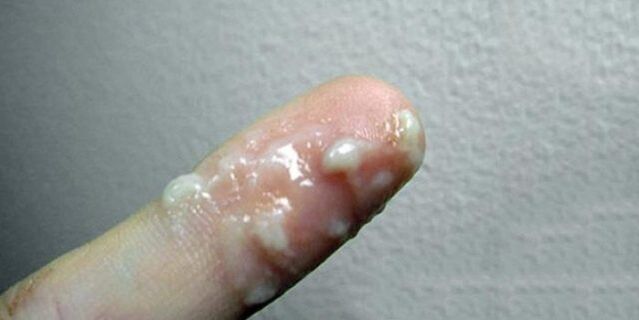
Specific secretions
Discharge from the urinary canal in prostatitis can be of the following types:
- Milk-colored, thick discharge signals the development of an inflammatory process in the prostate.
- Uncontrolled release of sperm from the urethra indicates the transition of prostatitis to a chronic form or the development of other diseases of the genitourinary system.
- Purulent discharge occurs in delayed prostatitis, but in combination with an elevated temperature, it is a symptom of the transition of the disease into an acute form.
- Purulent discharge mixed with mucus is observed in the presence of bacterial prostatitis caused by microorganisms that are primarily infected by sexual contact.
Treatment of prostatitis
Complete healing of prostatitis is a rather long-term process that requires an integrated approach.First, with the help of laboratory tests, diagnostics are carried out to determine the nature of the disease, ultrasound examinations, MRI and tomography are prescribed, with their help they clearly determine the presence of this disease, and not others with similar symptoms.
When the diagnosis of prostatitis is confirmed, the urologist prescribes the necessary therapy, which includes:
- Medicines that improve blood circulation.
- Medicines that relieve pain.
- Anti-inflammatory drugs.
- If there are signs of intoxication, detoxification solutions and electrolytes are prescribed.
- Additional measures may include diet, physical therapy, and sedatives.
Surgical treatment is indicated only for prostate abscess or complete blockage of bladder outflow.

How to treat prostatitis at home
Traditional methods of treating prostatitis include the use of natural remedies such as:
- Pumpkin seeds.
- Decoction and enema with chestnut bark.
- Tincture of ripe chestnut fruits.
- Freshly squeezed juices from carrots, beets, cucumbers, asparagus.
- Elderberry juice (black).
- Prostate massage.
But it should be remembered that such drugs are auxiliary, the treatment process will be quite long and must be supervised by a qualified urologist.
Prevention of prostatitis
Every man can independently carry out preventive measures:
- pay attention to physical activity, rationally alternate work, rest and physical activity;
- walk, and the more the better;
- adhere to the rules of a healthy diet and lifestyle;
- see a doctor if even minor symptoms of the disease appear;
- use contraceptives;
- men at risk should not carry heavy objects and also avoid excessive physical exertion;
- maintain an orderly sex life.
Reviews
Forums dedicated to various methods of prostate disease treatment are full of messages with the same leitmotif:
- this disease affects about 60 percent of men in adulthood (over 40 years old);
- many of them keep postponing a visit to a specialist, causing illness, due to which prostatitis becomes a chronic disease;
- pain signals that appear and the presence of a characteristic discharge are often perceived as manifestations of sexually transmitted diseases and they themselves, and sometimes on the advice of friends, take medication, although they surely know that it is better to consult a specialist;
- Almost everyone experiences erectile dysfunction, decreased libido and sexual dysfunction.